
The Great Slowdown: League's TTK Revolution Still Thriving in 2026
The Durability Update slowed League's frantic pace, transforming instant-deletion fights into strategic duels.
It’s 2026, and time in Summoner’s Rift now moves like a well‑rehearsed ballet instead of a caffeine‑fueled mosh pit. Veteran players still remember the electric chaos of early 2022, when a teamfight could evaporate in under three seconds and even fed tanks melted like butter on a hot skillet. Then came RiotAxes’ now‑legendary Reddit confession: the damage had spiraled too far, and the developers were secretly brewing a remedy. That teaser, dropped alongside Patch 12.8, would ripple through League of Legends like a rock tossed into a calm pond, eventually reshaping the very DNA of combat.
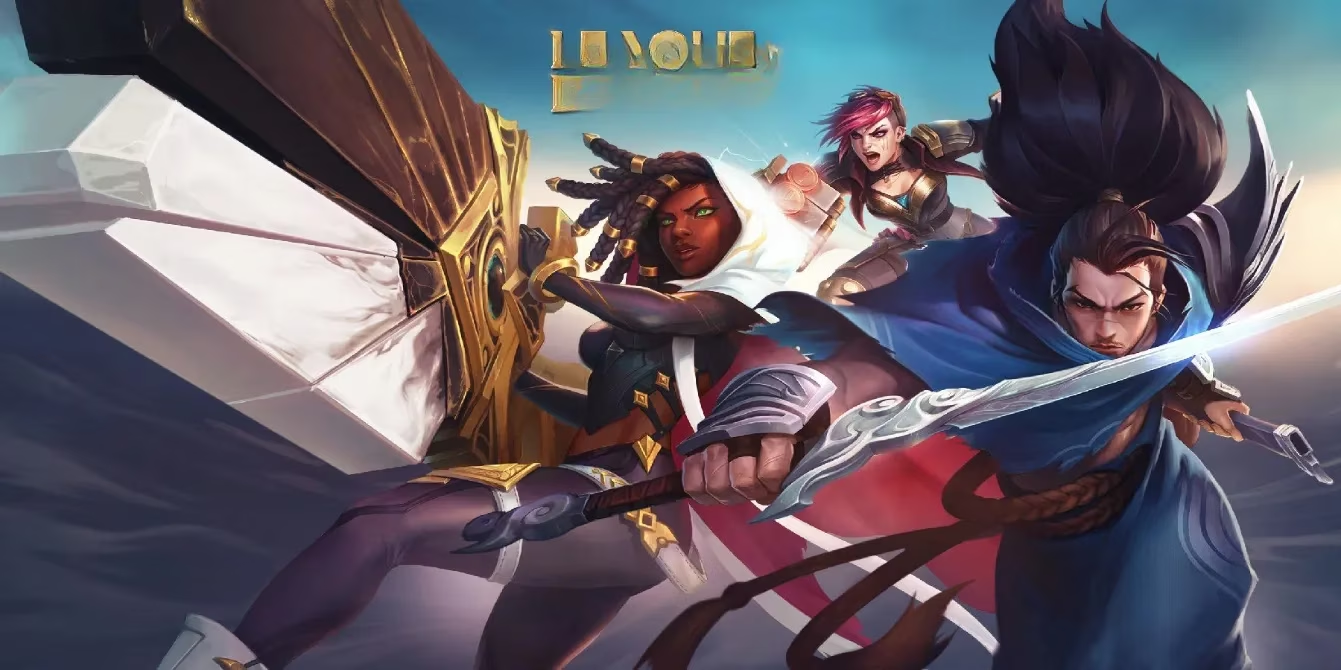
Back in May 2022, the MOBA felt more like a twitch‑reaction shooter. “Time to kill” had shrunk to the point where assassins deleted squishies before the human eye could register the health bar moving. RiotAxes, a developer account, openly admitted on the League subreddit that the team was discussing ways to “counteract the ease of killing an enemy and make it more of a time‑consuming effort.” The post exploded – old‑guard fans who longed for the strategic chess matches of seasons past finally saw a crack of daylight. Newer players, raised on the adrenaline of instant takedowns, braced for what felt like a forced diet of decaf.
⚔️ The real earthquake landed with Patch 12.10, the infamous Durability Update. Overnight, every champion received a hearty buff to base health, armor, and magic resistance. Healing and shielding were re‑tuned so that sustain no longer felt like slapping a Band‑Aid on a severed limb. It was as if Riot had wrapped every champion in silk – a delicate analogy for the sudden transformation of fragile porcelain figurines into resilient statues. Community reactions split like a river around a boulder. Some mourned the death of the 0.2‑second highlight reels; others celebrated the return of extended duels where decision‑making actually mattered.
💬 “It’s like they switched the game from blitz chess to a slow‑brew tea ceremony,” posted one Reddit user, and the metaphor stuck. Indeed, the new paradigm felt less like a frenetic microwave dinner and more like a carefully simmered stew – flavors took time to develop, and a single misstep no longer spelled instant deletion. The Durability Update didn’t just pad numbers; it fundamentally rewired how players approached every phase of the game. Assassins had to genuinely earn their kills, mages could survive a single rotation of spells with a sliver of HP, and tanks finally shrugged off poke like light drizzle on a raincoat. The meta shifted, and so did the playerbase’s patience.
🎮 By 2023, the slower pace had become the new normal. Players who once cursed their inability to react to a Fizz combo now found space to outplay, kite, and turn fights. The learning curve steepened in the best possible way – mechanics still mattered, but so did macro awareness and resource management. Riot continued fine‑tuning the dial, careful not to let combat grow sluggish. A fascinating side effect emerged: older players who had drifted away during the hyper‑speed era began returning. They discovered a game that honored the methodical tension of seasons 3 or 4, yet still delivered the modern polishing of VFX, champion reworks, and mythic item diversity. The Durability Update acted like a gravitational force, pulling back a diaspora of veterans who had been adrift in faster, more punishing titles.
Fast‑forward to 2026, and the echoes of Patch 12.10 are woven into the fabric of League’s design philosophy. The time‑to‑kill sweet spot has stabilized; fights typically last 12‑20 seconds, enough for multiple rotations and meaningful positioning dances. The art of the clean ace now demands coordination that resembles a tightly orchestrated jazz improvisation rather than a single overpowering crescendo. New champions are designed with built‑in trade‑offs that honor this rhythm. Even the latest leak – a supportive jungler named Nyx who manipulates darkness zones – seems tailored for prolonged skirmishes instead of instant burst.
Of course, not everyone toasts to the slower beat. A vocal minority, mostly Gen Z players who grew up with twitchy battle royales, still grumble about “tanks being unkillable” or mages “living on one HP like cockroaches.” But the numbers tell a story of contentment: average session length dipped briefly after the update, then rebounded and stayed elevated. Player retention metrics, according to third‑party trackers, are healthier than ever, and the annual World Championship routinely smashes viewership records. Riot’s gamble to trust the data and the older guard’s nostalgia paid off handsomely.
🌌 Beyond the Rift, the IP continues to burn bright. Arcane Season 2 dropped to critical acclaim in 2024, expanding the lore of Piltover and Zaun with the same gorgeous animation and emotional gut‑punches as its predecessor. Rumors of Season 3 already buzz through social media, while the long‑gestating League MMO – whispered about since the early 2020s – finally entered closed alpha in late 2025. All this cultural momentum tends to circle back to the game itself. When new viewers binge Arcane and install League for the first time, they encounter a combat system that feels cinematic and readable, not a chaotic strobe light.
So as 2026 marches on, the slow‑fight philosophy remains one of Riot’s boldest but most rewarding corrections. What began as a tiny developer reply on Reddit blossomed into a movement that redefined competitive play, proving that sometimes hitting the brakes can be the ultimate power move. The porcelain champions have grown silk‑woven resilience, the tea ceremony replaces the microwave scramble, and Summoner’s Rift continues to host duels that are less about who can blink faster and more about who can think deeper. And honestly? That’s a dance worth watching.