
The Bot Revelation: When Streamer's Trash Talk Meets Fortnite's AI Reality
Discover the shocking truth about Fortnite bots and matchmaking as streamer Tyler1's viral realization unfolds. This hilarious and humbling moment reveals the essential yet invisible role of AI in shaping your gameplay. Learn how Epic Games' clever system balances skill-based lobbies and queue times.
Picture this: a popular streamer, riding high on a wave of competitive bravado, dominating what he believes are real players in Fortnite, only for his chat to deliver a truth bomb that deflates his ego like a balloon in a hurricane. This was the exact scenario that unfolded for League of Legends star Tyler1 during a recent 2026 Fortnite stream. In the middle of some classic, fiery trash talk, his viewers clued him into a shocking reality—many of the opponents he was so easily dispatching weren't human at all. They were bots, a fundamental but often overlooked part of Fortnite's matchmaking ecosystem designed to smooth out the player experience.
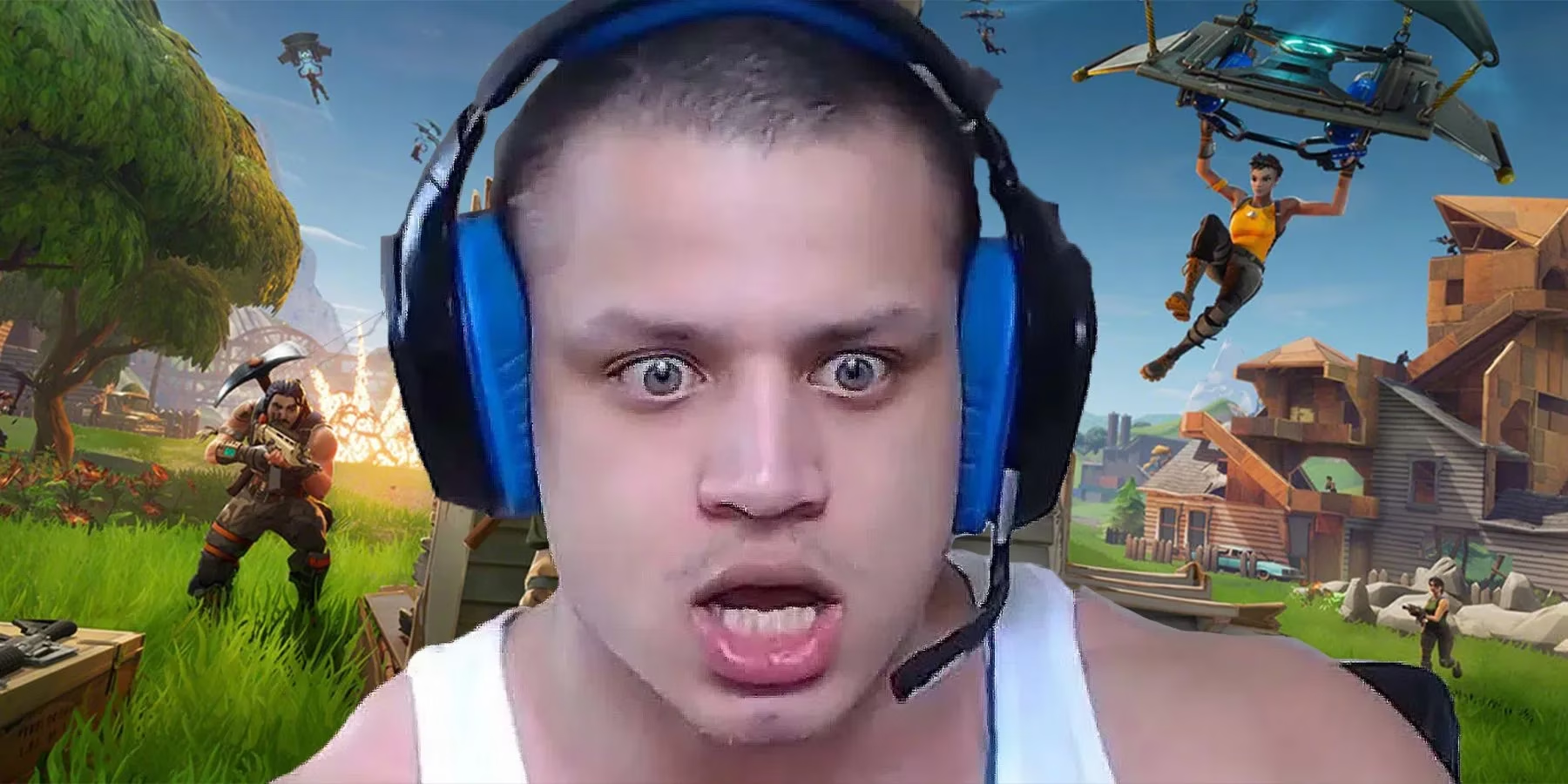
This moment of realization, captured in a now-viral clip, became a hilarious and humbling spectacle. The game had lasted nearly thirty minutes, with Tyler1 operating under the confident illusion that he was "mopping the floor with real people." His denial was palpable at first. How could these be bots? To test the theory, he conducted a simple, almost scientific experiment: he stood completely still in front of an enemy. What followed was a comedy of errors—the opponent slowly backed away while firing a comical barrage of about forty missed shots. The evidence was irrefutable. The streamer's subsequent reaction was priceless: a slow lean back in his chair, a gaze lifted skyward as if seeking divine explanation, and the silent acceptance that his earlier boasts now made him the rightful target of his chat's relentless teasing. He was left to ponder one burning question: had any of his enemies been real?
The Invisible Cast of Fortnite's Arena 🎭
For many, Tyler1's surprise might be surprising in itself. How could a seasoned gamer not know about bots? The truth is, Fortnite's AI players are like the stagehands in a grand theater production—essential for the show to go on, but designed to remain unnoticed by the audience. This system wasn't always part of the game. When Fortnite Battle Royale launched in 2017, matches were 100% human. The AI revolution began quietly in late 2019 as part of a major push for better skill-based matchmaking (SBMM).
The core premise is elegantly simple yet crucial for player retention in 2026:
-
Skill-Based Grouping: The system first tries to group players of similar ability together.
-
AI Fillers: To ensure fast queue times and full 100-player lobbies, it then populates the remaining slots with AI-controlled bots.
-
Dynamic Adjustment: The number of bots isn't fixed. It can range from 20 to 75 per match, acting as a dynamic buffer that fluctuates based on:
-
The number of similarly-skilled players queueing at that moment.
-
The time of day (overnight hours often see more bots).
-
The player's own skill level and frequency of play.
-
The Double-Edged Sword of AI Companions ⚔️
Bots serve a specific psychological and practical purpose in modern online games. For Epic Games, they are the digital mortar holding the matchmaking bricks together, preventing long waits and hopelessly one-sided games.
The Pros (The Confidence Builders):
-
Onboarding New Players: They provide a gentler learning curve. New or less-skilled players aren't immediately thrown to the wolves (or rather, the elite builders and editors).
-
Faster Queues: Keeps the game feeling alive and active, even during off-peak hours.
-
A Sense of Progression: Securing eliminations, even against bots, can provide a dopamine hit and build a player's confidence, encouraging them to keep playing.
The Cons (The Illusion Breakers):
-
The Boredom Factor: As Tyler1's chat hinted, matches can become predictable and unchallenging if the bot density is too high. Winning feels less earned.
-
The Skill Ceiling: Over-reliance on bot-filled lobbies can create a false sense of skill. A player might think they're improving dramatically, only to hit a wall when facing a lobby full of savvy human opponents.
-
The "Gotcha" Moment: The eventual discovery that many foes were AI can lead to a feeling of deflation, much like finding out a magician's secret—the wonder is gone.
For Tyler1, a player known for his unshakeable competitive spirit—a man who reached the Challenger tier in League of Legends on all five roles—this encounter was a peculiar twist. Bots are meant to build confidence, but in his case, they constructed a house of cards that his chat was all too happy to blow down. His infrequent forays into Fortnite likely placed him in the SBMM bracket where bots are most prevalent, sometimes making up half or more of a lobby.
The Evolving Botscape in 2026 🔮
As players climb the ranks, the bot presence significantly thins out, like fog burning away under the morning sun. High-tier lobbies in 2026 are predominantly human-versus-human battlegrounds. However, bots have become more sophisticated over the years. They are no longer the simple, backing-away bullet sponges of old (though they still have their moments). Modern Fortnite bots can:
-
Build basic structures for defense.
-
Use healing items.
-
Exhibit slightly more complex combat behaviors.
Yet, they remain distinctly different from human players. They lack the unpredictable creativity, the aggressive edit plays, and the nuanced game sense that defines top-level play. They are, in essence, the training wheels of the battle royale—meant to be used until balance is achieved, and then left behind.
Tyler1's experience serves as a perfect, humorous case study of human interaction with game design meant to be invisible. It highlights the delicate balance developers like Epic Games must strike in 2026: using AI to create a seamless, engaging, and accessible experience for millions without shattering the competitive illusion that is so vital to a game's spirit. The next time you secure a satisfying elimination in Fortnite, you might just pause for a second and wonder... was that a triumphant outplay, or simply a scripted step in a bot's digital dance? The mystery, it seems, is part of the modern gaming fun.