
The Art of Ink: Exploring the Most Iconic and Meaningful Tattoos in Video Games
Explore the profound symbolism of video game tattoos in 2026, where ink defines iconic characters like Jack from BioShock and Jinx from League of Legends, weaving narratives of destiny and chaos into digital artistry.
As a lifelong gamer and admirer of digital artistry, I've always been fascinated by the intersection of personal expression and interactive storytelling. Video games, much like tattoos, are powerful mediums of art, capable of conveying deep narratives, complex emotions, and unique identities. In 2026, the evolution of character design continues to impress, with ink playing a pivotal role in defining some of gaming's most memorable figures. These aren't just cosmetic details; they are woven into the very fabric of a character's soul, serving as silent narrators of their past, present, and future. From chains that bind to dragons that roar, let's delve into the virtual skin and explore the stories etched in digital ink.
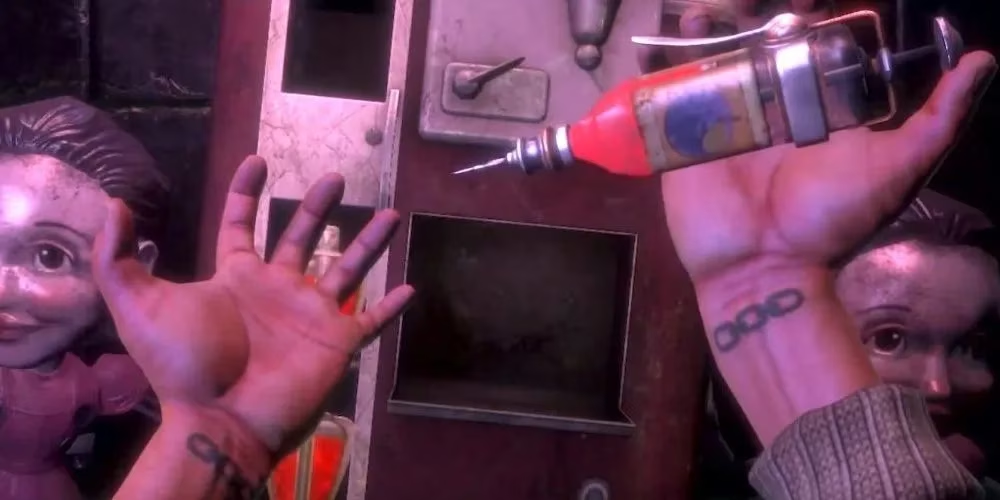
The Chains of Destiny: Jack from BioShock
My journey into the meaning behind video game tattoos begins in the sunken, art-deco nightmare of Rapture. BioShock remains a titan of narrative-driven FPS games, and its protagonist, Jack, carries a silent, powerful symbol on his wrists. Those iconic chain tattoos are more than a cool aesthetic choice; they are the visual representation of his tragic conditioning. As players, we discover Jack was genetically engineered to obey commands prefaced with the phrase "Would You Kindly." The chains symbolize his inescapable fate as a living weapon, a puppet whose strings were pulled by his own biological father, Andrew Ryan. The profound moment of Jack breaking free from this programming is mirrored in the symbolism of the chains—what was once a mark of slavery becomes a testament to his hard-won autonomy. It's a masterclass in visual storytelling where body art defines the central conflict.
Anarchy in Ink: Jinx from League of Legends & Arcane
Chaos personified! When I think of characters whose appearance perfectly matches their psyche, Jinx from League of Legends and Arcane instantly comes to mind. Her vibrant, patchwork tattoos of whimsical blue clouds and purple bullets aren't just random doodles. They are an external map of her volatile, manic, and creatively destructive mind. Adorning the right side of her body, this ink flows like her erratic thought patterns, a brilliant contrast to the sterile order of Piltover. In the critically acclaimed Netflix series Arcane, these tattoos gain even more depth, visually tracking her transformation from the vulnerable Powder into the unhinged Jinx. Every splash of color and every bullet shape feels like a fragment of her fractured history, making her one of the most visually compelling characters in modern gaming and animation.
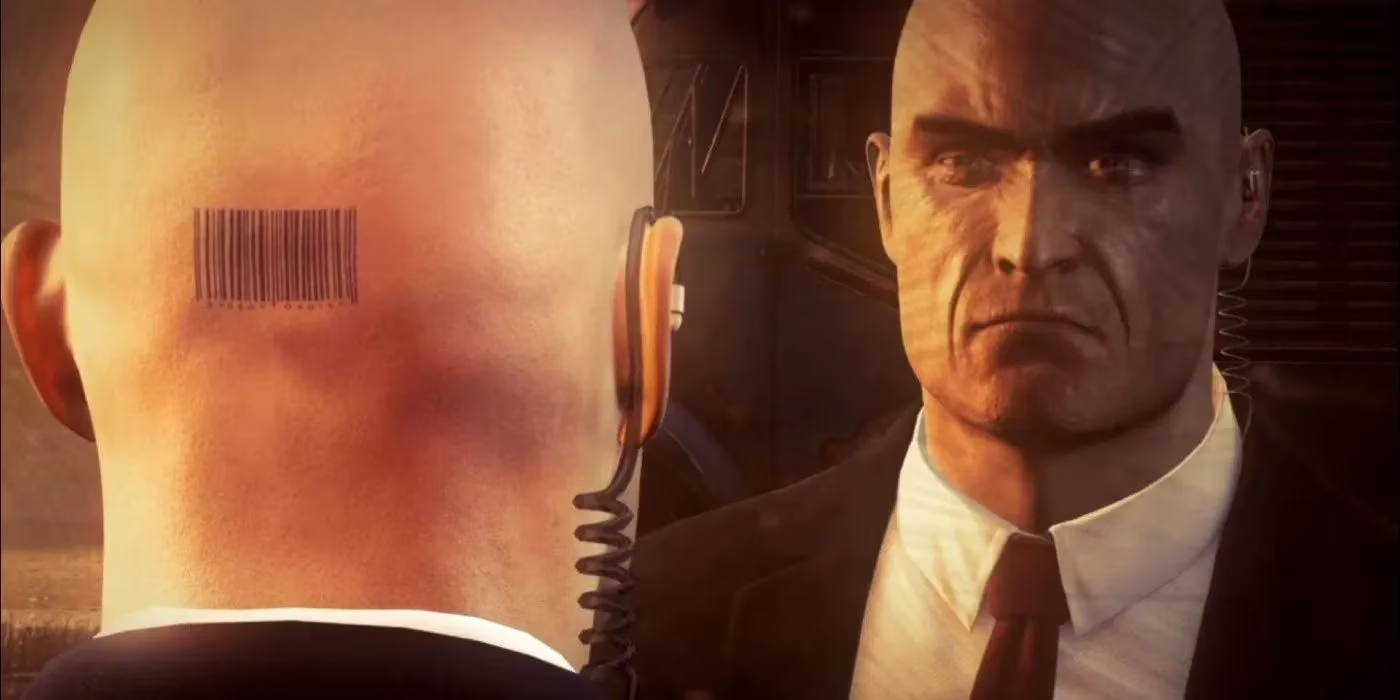
The Functional Mark: Agent 47 from Hitman
Sometimes, a tattoo is not just art—it's a tool. For Agent 47, the stoic protagonist of the Hitman series, the barcode on the back of his head is his most defining feature. This isn't mere branding; it's a functional identifier for the ultimate genetically engineered assassin. As a clone created for cold, efficient execution, this barcode allows him access to secure facilities, including the very one where he was trained. It's a constant reminder of his origins as corporate property, a living weapon. The series even explores his desire to remove it in Hitman: Absolution, symbolizing a struggle for identity beyond his programming. In a world of ornate designs, the chilling simplicity of a barcode tattoo speaks volumes about a character built for a singular, brutal purpose.
Tags of a Runner: Faith Connors from Mirror's Edge
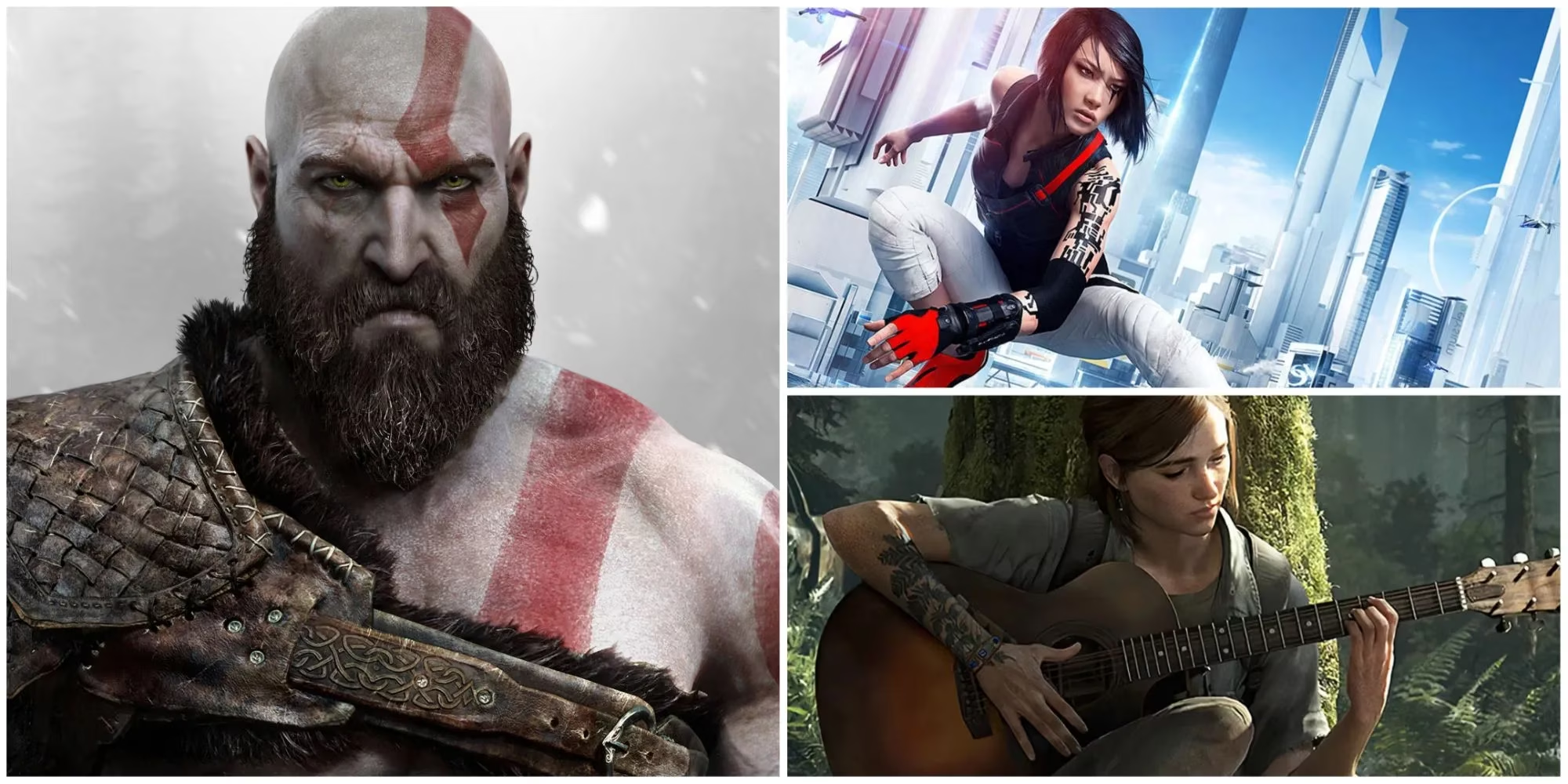
In the stark, oppressive white landscape of Mirror's Edge's The City, color is an act of rebellion. Faith Connors, a Runner who navigates the rooftops to deliver messages, embodies this rebellion through her striking black-work tattoos. In this dystopia, Runners use tattoos as unique tags for identification. Faith's ink tells her personal story:
-
A black starburst around her eye: A permanent commemoration of her first successful run, a badge of honor and a rite of passage.
-
A circuit-board design on her arm: A heartfelt, technological ode to her mother from the original game, connecting her past to her present mission.
Her tattoos are a splash of defiant identity in a world that seeks to homogenize, making her not just a courier, but a moving canvas of resistance.
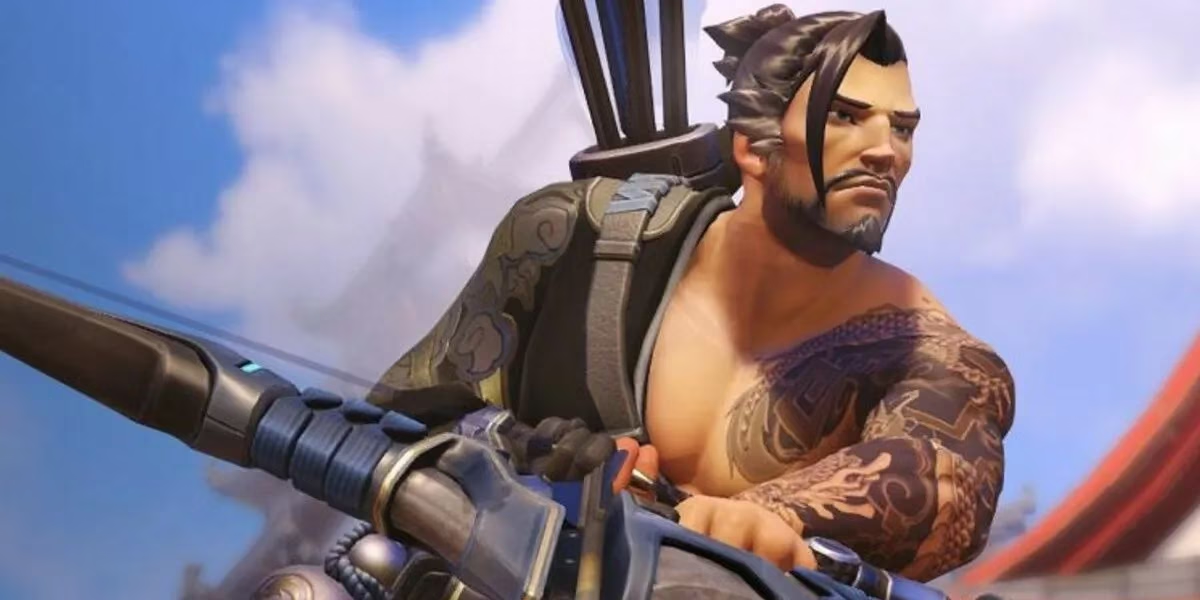
The Dragon's Call: Hanzo Shimada from Overwatch 2
The power of heritage and familial duty is literally etched onto Hanzo Shimada's skin in Overwatch 2. His magnificent, ornate dragon tattoo is not merely decorative; it is the physical vessel for his ultimate ability, Dragonstrike. This Japanese-style dragon coiled in storm clouds represents the ancient folklore of the Shimada clan and his fraught relationship with his brother, Genji. When activated, the ink seems to come alive, the dragon spirit surging from his body as a powerful attack. It's a perfect fusion of gameplay mechanics and character lore. The tattoo symbolizes the burden and the power of his birthright, a constant reminder of the legacy he must both carry and transcend.
A Patchwork Soul: Judy Alvarez from Cyberpunk 2077
Night City is all about style and substance, and no character blends the two through ink better than Judy Alvarez in Cyberpunk 2077. As a braindance technician and a potential romance for V, Judy uses her body as a canvas in the truest sense. Her patchwork of colorful tattoos is a diary in skin:
-
Quotes and traditional imagery reveal snippets of her beliefs, her passions, and her vulnerabilities.
-
Each piece feels personal, reflecting her artistic soul, her resilience, and her complex emotions.
In a genre defined by cybernetic modification, Judy's purely organic tattoos stand out as deeply human. They tell a story more effectively than any data-shard, making her one of the most authentically crafted characters in the game.
A Moth's Memory: Ellie from The Last of Us Part II
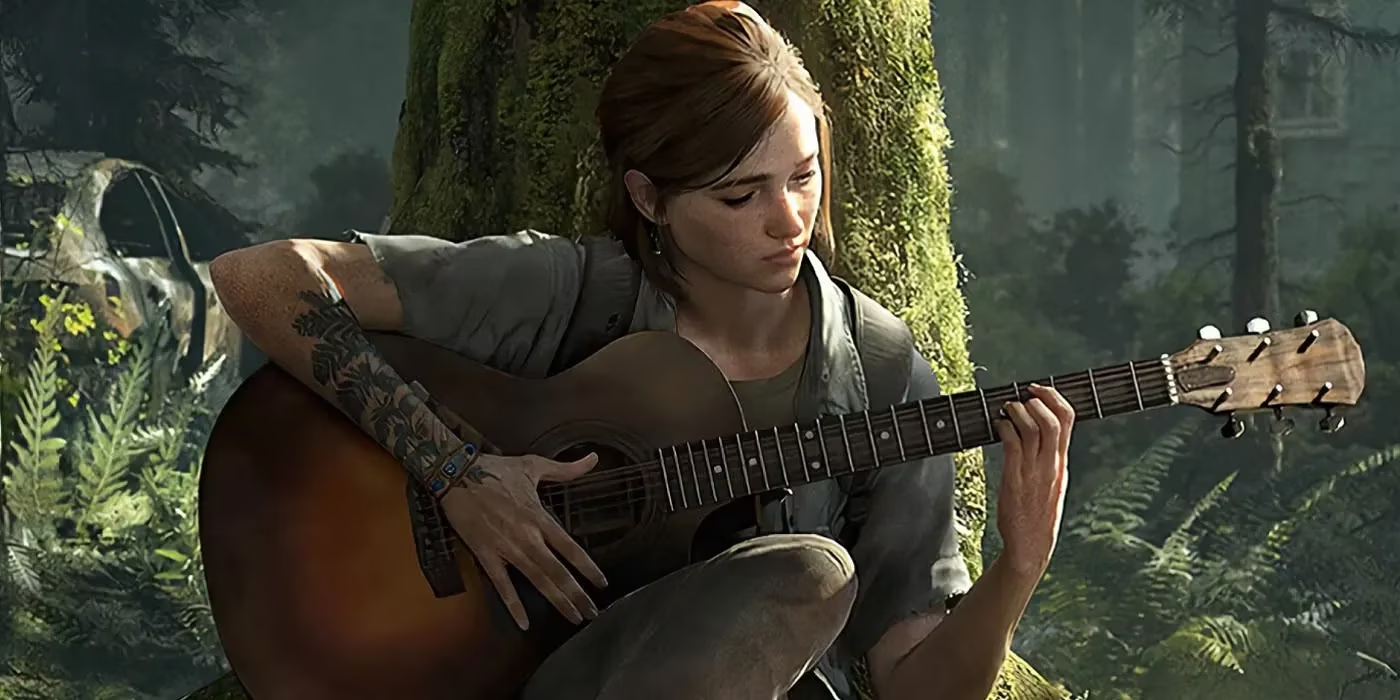
Few tattoos in gaming carry the emotional weight of Ellie's in The Last of Us Part II. What begins as a scar from an infected bite—a mark of her immunity and trauma—is transformed into a beautiful, poignant cover-up. Her tattoo of a giant lunar moth and fern leaves is a masterpiece of symbolic storytelling:
-
The Moth: A direct connection to Joel, her late father figure, who gifted her a guitar with a moth engraving. It's a permanent memorial, ensuring he is always with her.
-
The Act of Covering: Transforming a symbol of pain and loss (the scar) into one of love and memory represents her complex grieving process.
This tattoo is Ellie's heart worn on her sleeve, a silent, beautiful testament to love, loss, and the enduring scars of our past.
The Mark of Vengeance: Kratos from God of War
Finally, we have the markings that defined a generation of rage. Kratos's iconic red tattoos (or markings) in the God of War series have a tragic origin rooted in Greek mythology. They are not tattoos of choice, but brands of homage and vengeance, inspired by the birthmarks of his brother, Deimos. After Deimos was taken and killed due to a prophecy linked to these marks, Kratos scarred himself with the same pattern. This act transformed his body into a living monument to his loss and the fuel for his divine wrath. In the newer Norse saga, while the context has evolved, these marks remain a core part of his identity—a permanent reminder of the pain that forged the Ghost of Sparta and the God he later became. They are the visual cornerstone of one of gaming's most epic redemption arcs.
Conclusion: More Than Skin Deep
As I reflect on these incredible designs, it's clear that in the world of video games, tattoos are far more than decorative afterthoughts. They are:
-
Narrative Devices that reveal backstory and destiny (Jack, Kratos).
-
Psychological Profiles that visualize a character's mind (Jinx, Judy).
-
Functional Tools integrated into the game world (Agent 47).
-
Emotional Anchors that symbolize love, loss, and memory (Ellie, Faith).
-
Cultural and Familial Symbols that connect to larger lore (Hanzo).
In 2026, as character development reaches new heights of complexity, I am certain that the art of the virtual tattoo will continue to evolve, offering players even deeper, more meaningful connections to the digital personas we guide and embody. These markings prove that in gaming, the most compelling stories are often the ones written on the skin. 🎮✨