
Riot Games Explores New MMO Action RPG Territory, Potentially Set in Valorant Universe
Valorant MMO, Riot Games' new project, blends shooter action with RPG progression for an immersive, season-driven experience.
As the gaming landscape continues to evolve in 2026, Riot Games, the studio behind the global phenomenon Valorant, appears to be quietly forging a new path into the realm of persistent online worlds. A recently surfaced job listing for an "unpublished R&D product" has sent waves of speculation through the industry, strongly suggesting the developer is building an MMO action role-playing game with distinct parallels to genre titans like Destiny. The listing explicitly seeks candidates proficient in the progression systems of "MMO FPS, Competitive Shooter, and season-driven ARPG games," painting a picture of a hybrid experience designed for long-term player engagement. This move signals Riot's ambition to expand its portfolio beyond its established competitive arenas and into the thriving, if challenging, live-service MMO shooter space.
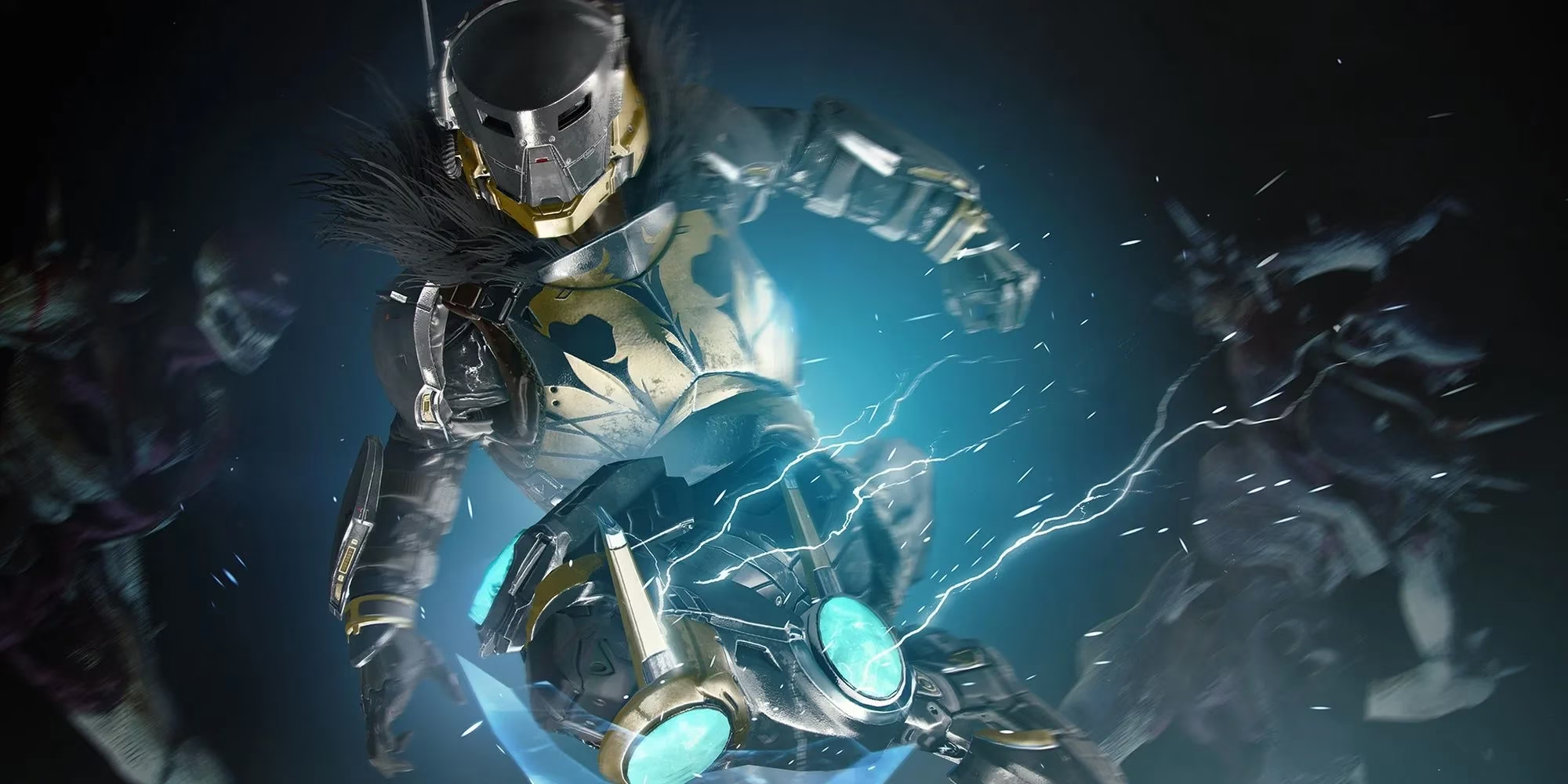
The discovery, initially highlighted by industry observer PlayerIGN, points to a project deeply inspired by the structural successes of games like Destiny 2. For years, Destiny 2 has operated like a gravitational well in the gaming cosmos, pulling in a dedicated player base with its blend of first-person shooter mechanics, deep RPG progression, and evolving seasonal narrative content. Despite numerous attempts by competitors, few have managed to replicate its sustained success. Riot's job requirements indicate a clear understanding of this formula, seeking developers who can craft "long-form progressing systems" that keep players invested over months and years, not just weeks.
🔍 The Clues in the Listing
The job posting reveals several key details about Riot's mysterious project:
-
Genre Fusion: The call for expertise in MMO FPS and ARPG systems suggests a game that combines real-time shooter combat with character-building depth and loot-driven progression.
-
Technical Foundation: Other associated listings for the same R&D product list experience with Unreal Engine as a prerequisite, strongly hinting this will be the game's development platform, a shift from Riot's proprietary tools used for League of Legends and Valorant.
-
Live-Service Focus: The emphasis on "season-driven" design confirms the title is being built from the ground up as a live-service game, intended to grow and change through regular content updates.
A compelling layer of speculation, fueled by PlayerIGN, is the potential setting: the Valorant universe. Riot has meticulously cultivated a rich lore and a cast of charismatic, superpowered Agents since the game's launch. This foundation offers a ready-made tapestry of narratives and abilities, much like a composer having a full symphony's worth of motifs before writing a new concerto. Translating the tactical, ability-based gunplay of Valorant into a sprawling, explorable PvE world presents a tantalizing opportunity for both narrative expansion and gameplay innovation.
🎮 Potential Gameplay Directions
While the listing leans heavily into Destiny-like comparisons, the community has pondered other possibilities. Could Riot be venturing into the intense, high-stakes arena of extraction shooters like Escape from Tarkov or DMZ? PlayerIGN noted this intrigue, suggesting the final product might blend MMO and extraction elements, creating a unique hybrid. Imagine a world where squads of Agents embark on missions not just to defeat AI enemies, but to secure valuable assets and survive against both environmental threats and other player teams—a concept that would be as nerve-wracking and unpredictable as defusing a spike with the clock ticking down to zero.
However, the road to development has not been without potential obstacles. In recent years, Riot faced significant cybersecurity challenges, including a high-profile hack that disrupted development pipelines and led to ransom demands. Such events inevitably force a re-evaluation of priorities and timelines. While the core project likely remains, these incidents underscore the complex realities of developing a massive, always-online title in today's climate, where a studio's infrastructure must be as robust as the game worlds it creates.
📊 The Competitive Landscape
The MMO shooter arena, while lucrative, is notoriously difficult to penetrate. The table below outlines the challenge Riot's new title would face:
| Established Title | Core Strength | Riot's Potential Edge |
|---|---|---|
| Destiny 2 (Bungie) | Deep lore, refined gunplay, strong raiding community. | Pre-existing, popular lore from Valorant; expertise in competitive balance. |
| Warframe (Digital Extremes) | Incredible movement, vast weapon customization, free-to-play model. | Potential for high-production-value storytelling and cinematic presentation. |
| The Division 2 (Ubisoft) | Detailed open-world, cover-based tactical gameplay. | Fresh take on ability-based combat in an MMO setting. |
For Riot, success would mean not just creating a compelling game, but building a new pillar for its ecosystem. A Valorant-universe MMO could create powerful synergies, cross-promoting characters and stories between the competitive tactical shooter and its more exploratory, progression-focused counterpart. It represents a strategic evolution for the company, moving from dominating specific competitive genres to cultivating expansive, persistent worlds that capture player imagination for the long haul. As 2026 progresses, the industry will be watching closely to see if Riot can indeed craft a new lodestar for shared-world shooters, guiding a generation of players into its next grand adventure.