
Riot Disables Chemtech Dragon in League of Legends Hotfix Over Player Frustration
Riot abruptly disabled Chemtech Dragon and its camouflage zones, ending months of agony over League's oppressive Chemtech Rift.
The developers at Riot Games shocked the League of Legends community today by abruptly disabling the Chemtech Dragon, its corresponding Dragon Soul, and the map-altering camouflage zones through a rapid hotfix. This sweeping change arrives after months of heated debate over the Season 12 elemental drake additions, with many players labeling the Chemtech Rift as one of the most agonizing mechanics in recent memory. While Riot intended the new dragons to shake up Summoner’s Rift more aggressively than the original four Elemental Drakes, it appears the pendulum swung too far.
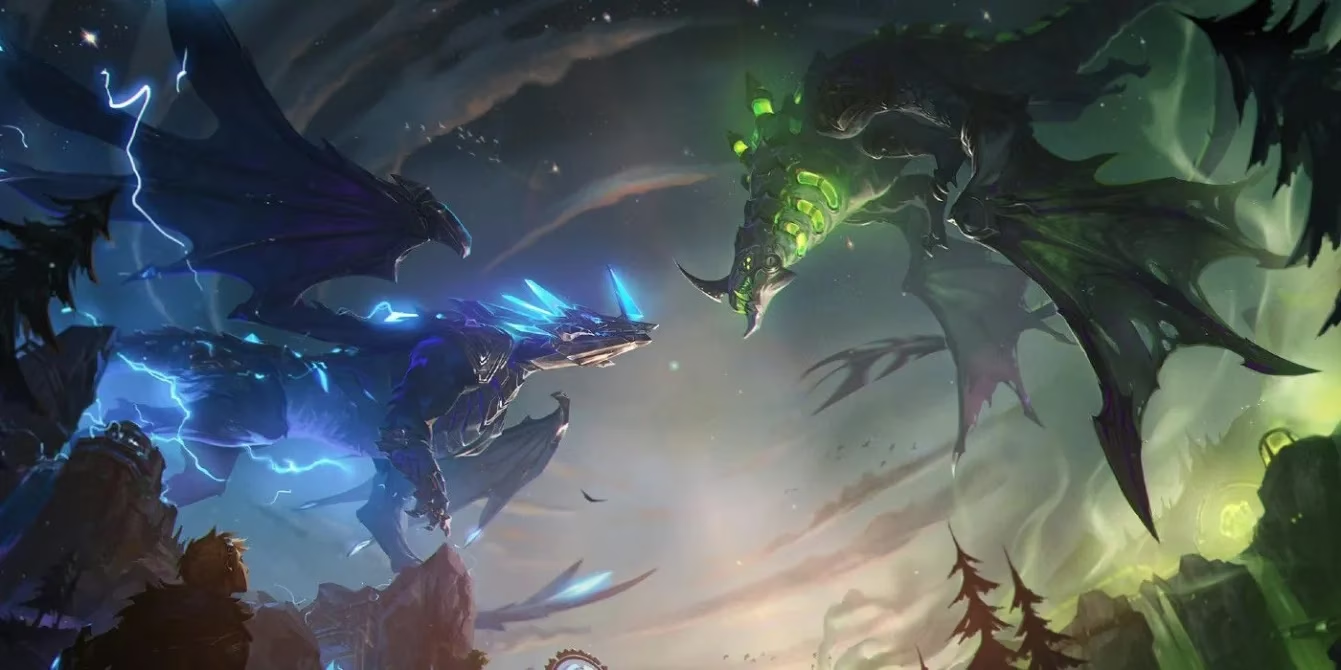
The Chemtech Dragon debuted alongside the Hextech Dragon at the start of Season 12, riding the wave of excitement from the hit Netflix series Arcane. Both drakes promised high-impact terrain transformations and soul buffs that would decide games more visibly than their predecessors. The Hextech Rift scattered teleportation portals across the jungle, while acquiring the Hextech Soul granted a chain-lightning slow and damage effect. The Chemtech variant, by contrast, shrouded each jungle quadrant in zones of camouflage, hiding champions who remained beyond a short distance from enemies. Its soul buff, perhaps the most controversial element, allowed defeated champions to resurrect temporarily as zombies, fighting for a few extra seconds before collapsing. The intention was cinematic, but the execution bred misery.
Why did this specific dragon provoke such intense backlash? The answer lies not in the zombie resurrection—though that certainly raised eyebrows—but in the camouflage fog itself. Once a team fell behind, the losing side’s jungler effectively lost access to their own camps. Entering the chemfog meant risking an ambush from an unseen opponent at every turn, making it nearly impossible to contest objectives or stabilize the game. The mechanic didn’t just tip the scales; it flipped the table. One-in-six games, the drake would randomly spawn, and if the early game went poorly, the contest felt over long before the nexus exploded. Riot acknowledged this bluntly in their patch notes, calling the Chemtech Rift “too frustrating to play with.” How could a core mechanic simultaneously evoke Zaun’s thematic danger and such widespread player disdain? Because theme, no matter how flavorful, must bow to competitive integrity.
Looking back from 2026, today’s hotfix marks a pivotal moment in League’s evolving design philosophy. The Elemental Rift system, introduced in Season 10, sought to make each match feel unique without sacrificing fairness. Mountain drakes added extra walls, Infernal drakes scorched away brush. Those changes were mild, almost gentle nudges compared to the Season 12 experiments. The Hextech and Chemtech dragons aimed for “higher impact,” and they delivered—just not in the way Riot hoped. While the Hextech Soul currently boasts the highest win rate among all souls, its terrain feature (the portals) at least offers counterplay: both teams can use them, and vision trinkets reveal their destinations. The chemfog, however, felt one-sided, punishing the already-behind team with a map that actively worked against them.
What happens next? Riot’s announcement states that the Chemtech dragon will remain disabled while the team iterates on the camouflage mechanic. They have made it clear that the soul and rift transformation will return only when they find a version that preserves the thematic thrill without destroying the comeback potential. In the four years since this hotfix, the development team has reworked the dragon twice. The first rework in late 2024 replaced the camouflage zones with gas vents that granted decaying movement speed and placed a brief nearsight debuff on enemies who entered the gas. This iteration proved more palatable but still received mixed feedback. By early 2026, the current live version of the Chemtech Rift offers a “scavenger” buff: plants that spawn in the jungle provide temporary adaptive force, and killing a plant leaves a small vision-granting spore. The zombie resurrection soul was entirely replaced by a decaying shield that explodes upon breaking, dealing percent-health damage. Are these changes perfect? No system ever is, but they represent a remarkable journey from that day when the original chemfog was ripped from the game.
This incident also sparked a broader conversation about how Riot integrates narrative elements into gameplay. Arcane made Hextech and Chemtech household terms, and the game’s writers and designers clearly wanted to bridge the gap. But when lore-based ambition undermines the competitive ladder, the community strikes back. The chemfog, as one popular Reddit thread put it, felt like playing inside a Silco fever dream—thematically rich, mechanically toxic. Could a different approach have avoided the mess? Perhaps iterative testing with a PBE-exclusive preview of the camouflage zones might have caught the frustration earlier. Instead, the drake launched as-is, and the fallout was immediate.
For now, the original Chemtech Dragon remains a cautionary tale in League’s history books. Players who endured its brief reign recall the dread of seeing that green icon in the HUD after losing first turret. The hotfix, while drastic, demonstrated Riot’s willingness to prioritize game health over sunk-cost development. In a 2026 landscape where the game boasts over 160 champions and a constantly shifting meta, the willingness to disable and redesign remains a crucial lever. The question Riot continues to ask itself is not “Can we make this cool?” but rather “Can we make this cool and fair?” The Chemtech Dragon may have returned in spirit, but the fog that once strangled comebacks has dissipated for good.