
Razer DeathAdder V3 Series Evolves: Faker Edition and Wired Variant Unveiled
Explore the cutting-edge Razer DeathAdder V3 Pro Faker Edition, a legendary gaming mouse collaboration with esports icon Faker, alongside the new wired DeathAdder V3. These releases deliver elite performance and iconic design, marking a thrilling new chapter in gaming hardware.
In the ever-evolving landscape of PC gaming hardware, Razer has consistently stood at the forefront, its name synonymous with high-performance peripherals. From the tactile click of a BlackWidow keyboard to the precise glide of a gaming mouse, the brand has cultivated a loyal following. Now, in 2026, Razer is once again capturing the community's attention by revisiting one of its most legendary product lines. The company has officially unveiled two significant new iterations of its iconic DeathAdder mouse: the DeathAdder V3 Pro Faker Edition, born from a collaboration with an esports titan, and a new wired variant, the DeathAdder V3. These releases mark the latest chapter in a legacy that spans nearly two decades, blending cutting-edge technology with the prestige of competitive gaming.
The Legacy of the DeathAdder
For over fifteen years, the Razer DeathAdder has been a cornerstone of the company's portfolio. Since its initial debut in 2006, this peripheral has been a constant companion for countless gamers. Razer has meticulously refined the archetype over the years, introducing enhancements to its sensor technology, ergonomic design, and aesthetic presentation. The lineage includes notable offshoots like the compact Mini version and the pioneering left-handed model, demonstrating Razer's commitment to inclusivity and innovation. The DeathAdder's enduring popularity is a testament to its foundational design—a comfortable, reliable form factor with two essential side buttons that has become a benchmark in the industry.
The DeathAdder V3 Pro Faker Edition: An Esports Icon
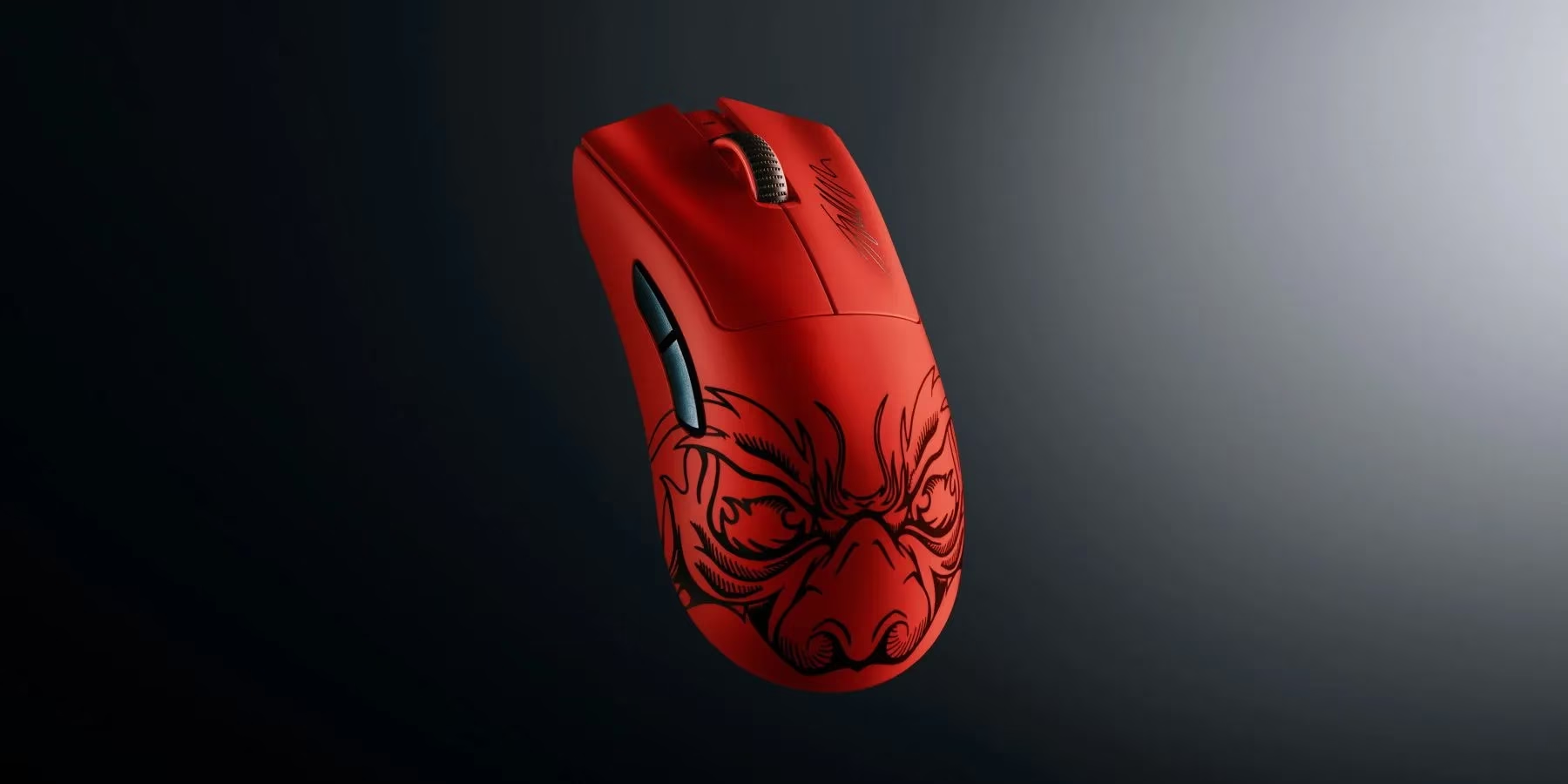
The highlight of this new announcement is undoubtedly the DeathAdder V3 Pro Faker Edition. This special variant is the result of a partnership with Lee "Faker" Sang-hyeok, the legendary League of Legends mid-laner for T1, often hailed as the "Unkillable Demon King" and widely considered the greatest player in the game's competitive history. This collaboration transcends a simple branding exercise; it represents a fusion of elite performance and esports heritage.
The mouse itself is a visual homage to Faker's legacy. It sports a striking, custom red-and-black color scheme that immediately distinguishes it from standard models. A particularly personal touch is Faker's own signature, elegantly laser-etched onto the right mouse button. This isn't just a piece of hardware; it's a collector's item for fans of the player and a symbol of competitive excellence.
Technical Prowess and Specifications
Both new models are engineered with Razer's latest and greatest technologies, ensuring they meet the demands of modern, high-level gaming. Here’s a breakdown of their core specifications and features:
| Feature | DeathAdder V3 Pro Faker Edition | DeathAdder V3 (Wired) |
|---|---|---|
| Connection | Wireless | Wired (Speedflex Cable) |
| Sensor | Razer Focus Pro 30K Optical Sensor | Razer Focus Pro 30K Optical Sensor |
| Switches | Optical Mouse Switches (Gen-3) | Optical Mouse Switches (Gen-3) |
| Programmable Buttons | 8 | 5 |
| Battery Life | Up to 90 hours (without lighting) | N/A |
| Key Feature | Faker Signature, Custom Design | Ultra-lightweight, No Latency |
| MSRP (2026) | $169.99 | $69.99 |
The heart of both mice is Razer's acclaimed Focus Pro 30K Optical Sensor, renowned for its flawless tracking accuracy and consistency. They also utilize third-generation optical mouse switches, which actuate with lightning speed and are immune to the double-clicking issues that can plague mechanical switches. The V3 Pro Faker Edition boasts an impressive battery life of up to 90 hours, making it a reliable wireless workhorse. Conversely, the wired DeathAdder V3 utilizes Razer's proprietary Speedflex cable, designed to be incredibly lightweight and flexible to eliminate drag and provide a near-wireless feel during intense gameplay sessions.
Razer's Expanding Ecosystem
The introduction of these DeathAdder variants is part of Razer's broader strategy to solidify its position as a comprehensive gaming lifestyle brand. While mice and keyboards remain its core, the company has aggressively diversified its portfolio. In the audio domain, Razer has expanded far beyond traditional headsets, now offering everything from high-fidelity wireless earbuds to advanced soundbars with head-tracking technology. The company has also ventured into more niche accessories, including:
-
🎮 Custom charging docks for console controllers.
-
💡 Sophisticated RGB lighting ecosystems for entire setups.
-
🖥️ Ergonomic gaming chairs and desks.
This approach allows Razer to create a seamless, immersive environment for gamers, where every piece of tech is designed to work in harmony.
Market Impact and Gamer Reception
Early indications suggest these new DeathAdder models are being warmly received. The Faker Edition, in particular, taps into the massive cultural cachet of esports, appealing not just to performance-driven players but also to collectors and fans of the iconic player. Its premium positioning is clear. Meanwhile, the wired DeathAdder V3 offers a compelling, cost-effective entry point for gamers who prioritize absolute performance and zero latency over the convenience of wireless technology. It serves as a reminder that wired peripherals still hold a vital place in the competitive scene.
In conclusion, with the DeathAdder V3 Pro Faker Edition and the DeathAdder V3, Razer has successfully executed a dual-pronged strategy. It has honored the rich history of its most famous product line while pushing it forward with top-tier technology and meaningful collaborations. One model celebrates the pinnacle of esports achievement, and the other reaffirms the core tenets of precision gaming. Together, they ensure the DeathAdder's legacy is not only preserved but actively evolving, ready to define the gaming experiences of 2026 and beyond.