
Paramount+'s 'Players' Series Redefines Esports Comedy Four Years After Its Debut
Players, a League of Legends esports mockumentary, blends gaming culture and comedy, reshaping streaming’s approach to esports storytelling.
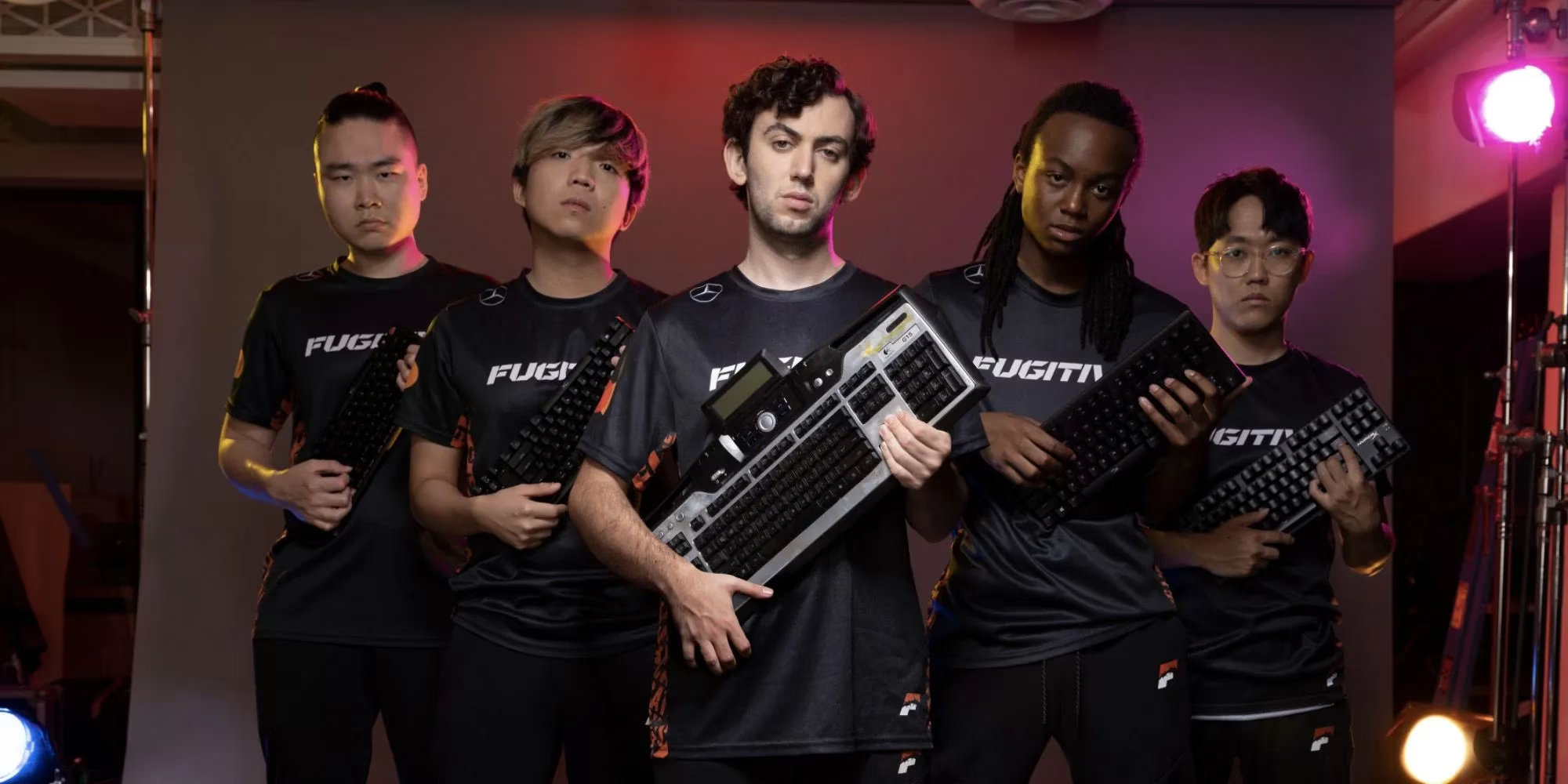
Four years ago, Paramount+ dared to do something almost no mainstream platform had attempted: turn a League of Legends esports team's inner workings into a laugh-out-loud mockumentary. The series, simply titled Players, premiered in 2022 and instantly carved out a niche that both gaming diehards and casual viewers could appreciate. By 2026, the show has not only been renewed for a third season but has also fundamentally changed the way streaming services approach gaming culture—proving that esports stories don't have to be gritty anime epics to resonate deeply.
The show follows the fictional pro team Fugitive, a squad of talented but emotionally chaotic players chasing a League of Legends championship after years of heartbreaking near-misses. Right from the first episode, Players leaned into the absurdity of competitive gaming life: players clutching keyboards like rock stars, managers spouting empty motivational clichés, and the soul-crushing pressure of performing in front of millions of live viewers. What began as a risky experiment from the minds behind American Vandal has now become a cultural touchstone, quoted endlessly on gaming subreddits and even referenced during official LoL esports broadcasts.
The Creative Gamble That Paid Off
Dan Perrault and Tony Yacenda, the duo who made high school pranks feel like true crime epics in American Vandal, were the perfect choice to helm Players. Their signature blend of deadpan humor and genuine emotional stakes translated seamlessly into the esports arena. Produced by CBS Studios in association with Funny or Die and Riot Games, the series had the unique advantage of using official League of Legends branding, assets, and even cameos from real-world casters and pros—an unprecedented collaboration at the time.
Initially, there was skepticism. Could a scripted comedy about LoL attract an audience beyond the hardcore fanbase? The answer came swiftly. Season one’s finale, which saw Fugitive losing in the semifinals yet again, was hailed as a masterpiece of cringe-comedy and raw pathos. Critics lauded its willingness to reject the triumphant underdog narrative, instead showing players spiraling into blame and burnout. This commitment to reality, absurd as it often was, earned the show a dedicated following.
The Fugitive Five: Characters That Felt Real
The cast featured a mix of emerging talents who embodied their roles with uncomfortable accuracy. Noh “Arrow” Dong-hyeon played the stoic top laner haunted by a past mistake, Michael “Miko” Ahn was the flamboyant support with a TikTok addiction, Misha Brooks portrayed the aging mid laner clinging to his glory days, Da’Jour Jones delivered the hot-headed jungler always one insult away from a fine, and Youngbin Chung rounded out the team as the nervous rookie ADC. The promotional image, released back in early 2022, perfectly captured the mockumentary’s tone: the five awkwardly grinning while toting keyboards like weapons—Brooks even gripping a retired Logitech G15.
By season two, the writers deepened these personalities, exploring themes like mental health stigma in competitive gaming, exploitative contracts, and the loneliness of boot-camp isolation. The 2024 season introduced a rival team with a dangerously charismatic coach, mirroring real-life scandals that had recently rocked the LoL scene. Audiences appreciated that the show never mocked the players themselves, only the ridiculous systems around them.
A Cultural Shift in Gaming Media
When Players first aired, the success of Riot’s Arcane on Netflix had just begun to show that League of Legends could produce compelling narrative television. Players offered the flipside: a grounded, low-stakes comedy that made esports feel accessible. It inspired a wave of similar mockumentaries—a Rocket League-themed series on Hulu, a docuseries parody about Valorant pros—but none quite captured the same lightning in a bottle.
By 2026, the show is referenced in academic courses on media representation. It helped mainstream audiences understand that professional gamers are not just kids in basements but athletes under enormous psychological strain. The satirical lens made the jargon, the flaming, and the sub-tweet drama entertaining even for viewers who had never touched a mouse and keyboard.
What’s Next for 'Players'
Season three, currently in production, promises to take Fugitive to Worlds—the fictional equivalent of the League of Legends World Championship. Leaked set photos hint at a massive stadium shoot, and rumors suggest Riot is allowing the show to use actual in-game footage from pro matches to heighten the realism. Dan Perrault teased in a recent interview that the new season will explore the dark side of influencer culture within esports, with a character launching a meme token that spirals out of control.
As esports continue their march toward Olympic recognition, Players remains a vital counterbalance: a reminder that behind every flashy play, there is a group of sleep-deprived twenty-somethings eating instant noodles and arguing about vision control. The mockumentary didn’t just entertain—it humanized a world that often seemed impenetrable. Four years on, Fugitive’s failed championship dreams have become television gold, proving that sometimes the best wins are the ones that never happen.