
My Take on Apex Legends Ranked Leagues and the Single-Map Dilemma
Apex Legends Ranked Leagues deliver thrilling competition and balanced gameplay, but single-map splits cause burnout and limit strategic diversity.
As a dedicated Apex Legends player who's been grinding Ranked Leagues since the early days, I've seen the competitive landscape evolve in fascinating ways. Unlike many battle royales that shy away from serious competition, Apex truly embraces it. Respawn Entertainment puts in tremendous effort to balance legends, weapons, and maps, creating an environment where newcomers and pros can test their skills. Sure, we still face issues like matchmaking quirks and occasional audio glitches, but overall, Apex's ranked system stands as one of the most balanced in the genre.
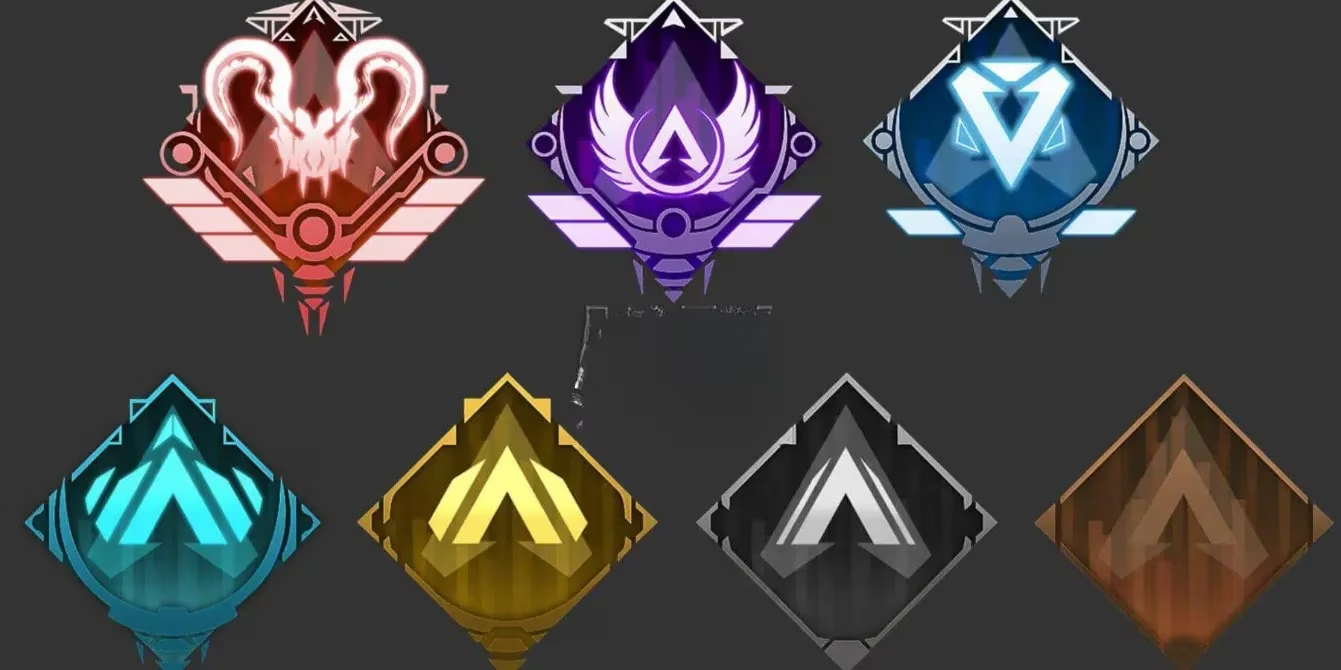
Let's talk about what makes Ranked Leagues unique compared to regular Duos and Trios. Since Season 4, each competitive season has been divided into two ranked splits. This structure creates a natural rhythm where your rank gets slightly reset between splits, encouraging continuous improvement. Your final rank—and those sweet, sweet rewards—depends on the highest rank you achieve across both splits. While this system has its nuances, there's one aspect that's been bothering me for seasons now: being locked into a single map per split.
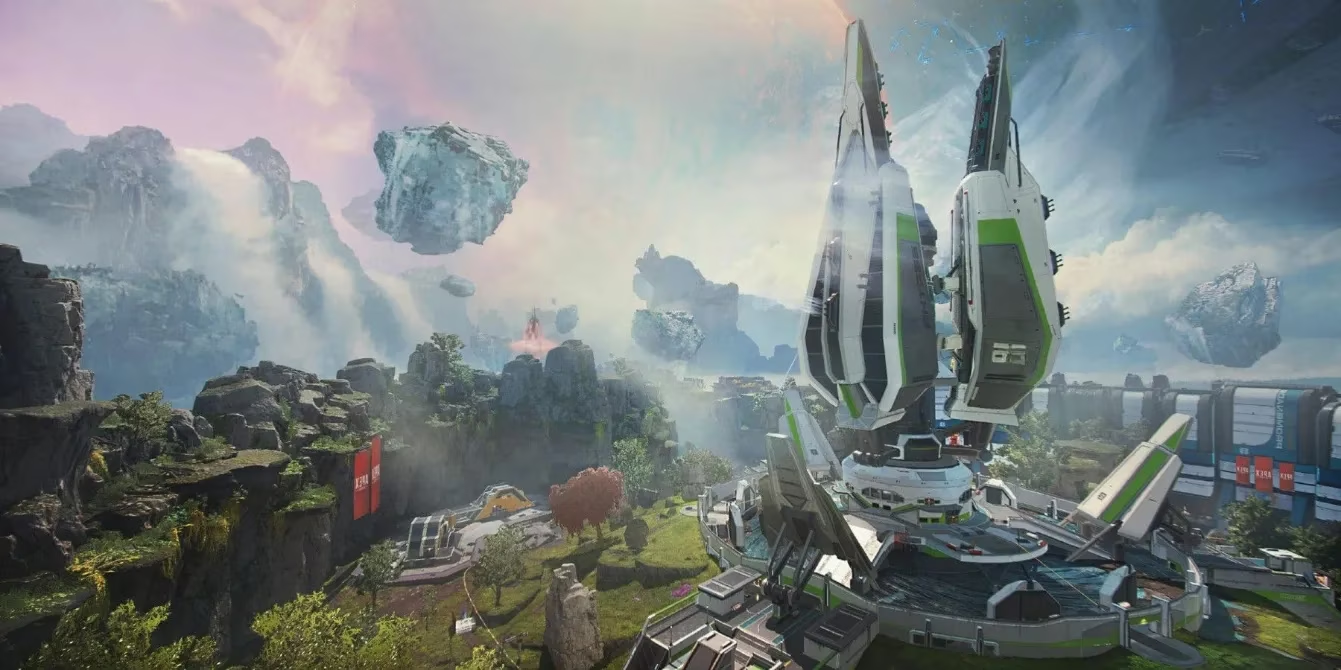
Remember when new maps would debut in the second split? That made so much sense! Players could learn the layout in casual modes first, then bring that knowledge into ranked play. But now, Respawn often throws us straight into new arenas like Broken Moon during the first split. I'll never forget starting Season 15 and immediately having to navigate that unfamiliar terrain while trying to maintain my RP. It felt like trying to solve a puzzle while someone kept moving the pieces.
Here's my perspective after playing through multiple seasons: The single-map approach creates unnecessary friction. When a fresh map like Broken Moon drops, I understand focusing on it for a while. But forcing players to grind Olympus or World's Edge for an entire month? That's where the tedium really sets in. Most ranked players already know these maps inside out—we don't need weeks of repetition to "learn" them.
What frustrates me most is seeing how other modes handle this better. Just look at the variety in Duos and Trios:
-
🗺️ Map rotations keep gameplay fresh
-
🔄 Multiple locations prevent burnout
-
🎯 Different strategies emerge naturally
Even Ranked Arenas, despite its player count challenges, offers map variety that makes the grind more enjoyable. The contrast is stark: while casual modes celebrate diversity, ranked feels artificially constrained.
I've discussed this with my regular squadmates, and we all agree—the current system creates several problems:
-
Burnout accelerates when playing the same map repeatedly
-
Meta becomes stagnant as players optimize for one specific environment
-
Learning opportunities diminish since you're not adapting to different terrains
-
Ranked feels more like a chore than an exciting challenge
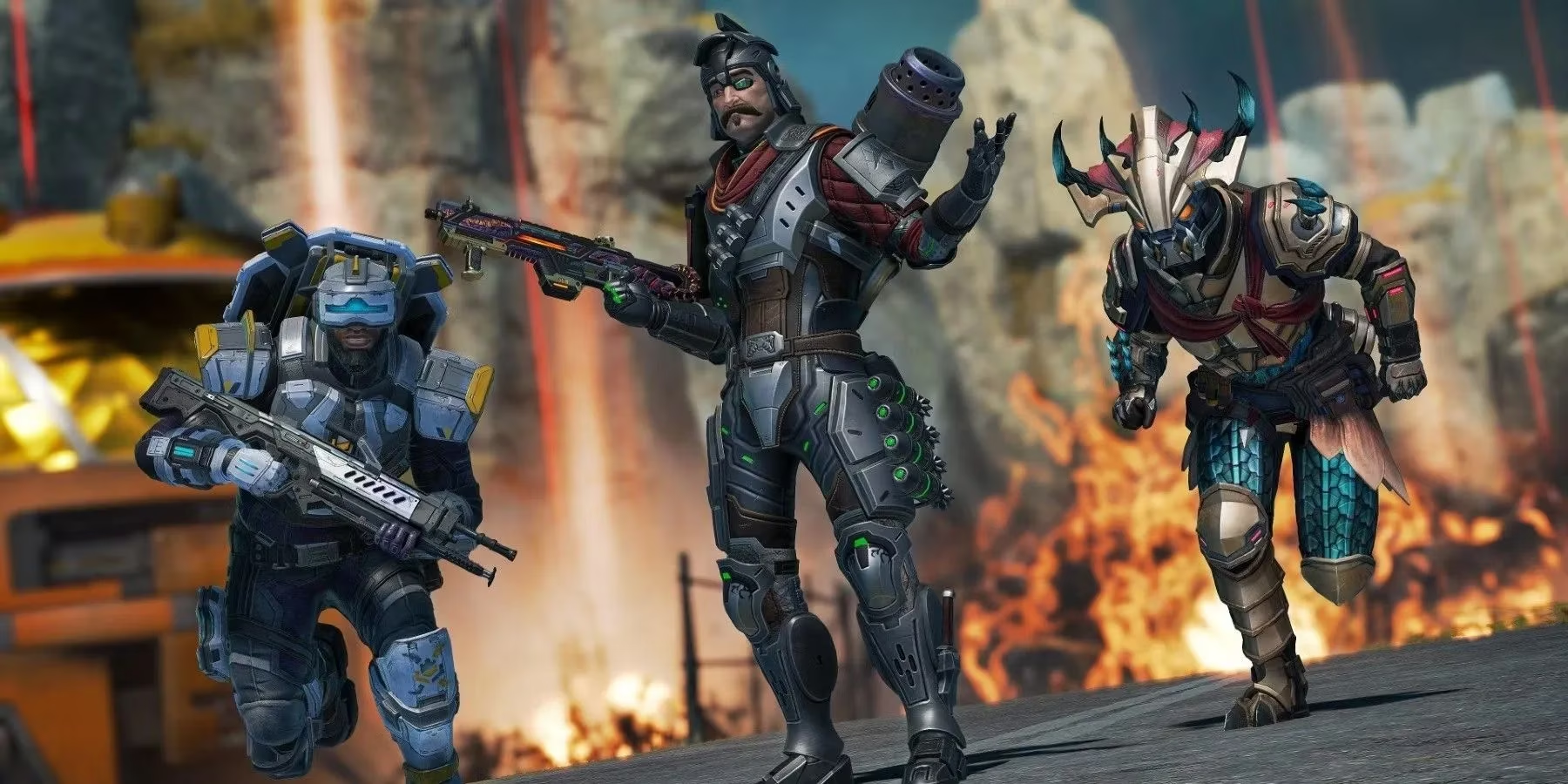
Let me paint you a picture of what a typical ranked split feels like now. The first week? Exciting! Everyone's exploring and developing new strategies. By week two, we've settled into predictable patterns. By week three, I'm sighing every time I see the same loading screen. And week four? Let's just say my motivation to play ranked drops significantly. This isn't about skill—it's about variety being the spice of competitive life.
What would I love to see? A hybrid approach that maintains competitive integrity while keeping things fresh:
-
First week: Focus on the new or featured map
-
Remaining weeks: Implement a curated rotation of 2-3 maps
-
Map bans/voting: Let teams have some agency in the selection process
-
Split finals: Return to the featured map for the final week
This approach would still allow players to master specific maps while preventing the monotony that currently plagues the mid-split experience. It would test our adaptability—a crucial skill in any competitive game.
Looking at the broader gaming landscape in 2026, most successful competitive titles understand the importance of variety. They balance consistency with freshness, recognizing that player engagement depends on both challenge and novelty. Apex Legends has so much going for it—incredible movement mechanics, diverse legend abilities, and generally smart design choices. The single-map ranked split feels like an outlier, a stubborn holdover from earlier design philosophies that no longer serve the player base.
My regular trio has started calling it "map fatigue syndrome." We'll be playing perfectly fine, then someone will groan, "Not Thermal Station again," and suddenly our coordination suffers. It's psychological, sure, but that's part of game design—keeping players mentally engaged matters just as much as mechanical balance.
I'm not asking for the chaotic randomness of some casual modes. Ranked should remain competitive and predictable in its rules. But predictability shouldn't mean repetition. The beauty of Apex's map design is how differently each location plays. Storm Point's verticality encourages different legends than Kings Canyon's close-quarters chaos. By limiting us to one, we're missing out on developing the full spectrum of competitive skills.
As the game continues evolving—now available on every major platform including mobile—the ranked experience should evolve too. New players joining in 2026 deserve a competitive system that showcases Apex's full potential, not just one slice of it. And veterans like me deserve a ranked grind that feels rewarding throughout the entire season, not just during the novelty period of a new split.
So here's my plea to Respawn: Trust your players. Trust that we can handle map variety in ranked. Trust that our skills translate across different terrains. The foundation you've built is incredible—now let's make the competitive experience match that greatness. Give us a reason to stay excited about every ranked match, not just the first few after a split reset. After all, variety isn't just the spice of life—it's the secret to keeping competitive games thriving year after year.