
How I Turned Toxic Flames into Free LP (Thanks to My Ego Threats)
League of Legends flame psychology and ego threats reveal how understanding in-game toxicity can transform your gameplay and mindset.
When I started playing League of Legends, I was a meek little Lulu main whose only mission in life was to keep the peace. I'd shield the ADC before they even knew danger existed, ping "on my way" seventeen times to make sure everyone felt loved, and type "gj team!" after every single minion wave cleared. In my head, if I sacrificed every ounce of my own agency, the toxic gremlins on my team would have nothing to flame. Silly me. League players can always flame you.
Back then, whenever someone typed "Lulu diff" or "no supp" in all chat, my brain would just... shut off. Picture a tiny yordle in my skull frantically pressing the power button, smoke coming out of its ears. I'd sit there fuming, unable to land a single Polymorph for the next five minutes, completely tilted. It felt like a personal betrayal—I'd been the team's doormat all game, and they still blamed me for their losing lane. The injustice!
But over time, something clicked. I started thinking about why people flamed, and more importantly, why I reacted like a startled poro every single time. That simple mental shift not only cured my gamer rage, it actually made me a better player. I went from a scared little enchanter cowering under tower to a proactive playmaker who secretly loves it when the enemy team types something spicy. Here's the kicker: understanding flame isn't just about protecting your fragile ego—it's a legitimate strategy that can win you games.
Let's get psychological for a second, because this is where the magic happens. In League—and basically any team game where everyone is one missed smite away from being the scapegoat—players are under ridiculous pressure. That 0/7/0 top laner isn't just having a bad game; he's experiencing an existential crisis over whether he peaked in Silver 3. We all want to believe we're good. Heck, maybe we're better than that Masters ADC who just told us to uninstall. So when something threatens that belief, the brain goes into full defense mode. Psychologists call that an ego threat. I call it my brain's way of throwing a tantrum like a toddler who dropped his ice cream.
When the enemy Yasuo types "ggez jungler diff" after camping your lane 24/7, that's an ego threat knocking on your brain's door. Your brain, bless its overprotective circuits, immediately starts inventing reasons why that guy is wrong: he got lucky in his promos, his mid lane is boosting him, he probably uses chat macros for that level 2 all-in. Sound familiar? We either lash out or shut down entirely, because our brain hates admitting that, just maybe, we missed that crucial skillshot or face-checked the wrong bush at minute 28. And oh boy, does that cost us games.
But here's the thing: your teammate actually might have a point, buried under all that caps-lock poison. You probably already know you messed up. Maybe it was lag. Maybe it's just a bad day where your fingers feel like sausages. The important part isn't the words—it's what's happening inside that rager's head. And that, my friend, is free information.
League is a strategy game, and strategy is about using every scrap of intel you can get. Warding gives you map vision. Champion select gives you matchup knowledge. And flame? Flame gives you a live feed into your opponent's mental state. When someone flames you, they're essentially handing you a signed confession that says "I am stressed, insecure, and threatened by you." Would you ignore a ward revealing the enemy jungler? Of course not. So don't ignore the ward revealing their mental breakdown.
Let's say the enemy bot lane types "wouldn't have won lane without your camping jungler." Translation: they feel insecure about losing lane (nice), and they've lost faith in their own jungler (even nicer). You can capitalize on that with a snappy comeback—something like "maybe if your jungler ganked as often as you miss CS"—but the real win is in your gameplay. Deep ward their jungler's camps so they're even less effective. Roam with your own jungler for a three-man dive mid. Watch their frustration spread like a plague until someone ragequits. I've literally seen teams implode just because I typed "?" in all chat after a failed gank. The mental war is real.
And it works just as well when your own team is the one flaming. A few seasons ago, I would have replied with an essay defending my honor. Now? A simple "my bad, I'll play safer" can untilt even the angriest Draven main. It signals that you're not trolling, you're not going to run it down, and you're still trying to win. That tiny acknowledgment often stops the spiral, keeps people focused, and sometimes even makes them play better out of sheer disbelief that someone was nice.
All of this gave me the confidence to completely reinvent my playstyle. I'm no longer that terrified Lulu main who thought my only contribution was pressing E on the carry and praying. Fast forward to 2026, and I'm a confident mid laner who picks what I want and plays it without fear. The meta might have shifted—we've been through durability updates, mythic item removals, and whatever that Arcane-themed event was—but human psychology hasn't changed one bit. People still tilt. People still flame. And I still use their own words to mind-read my way to free LP.
So next time someone tells you to "kys" in chat, don't get mad. Get strategic. Remember: behind every toxic comment is a player whose mental is cracking, and that crack is a door you can walk through.
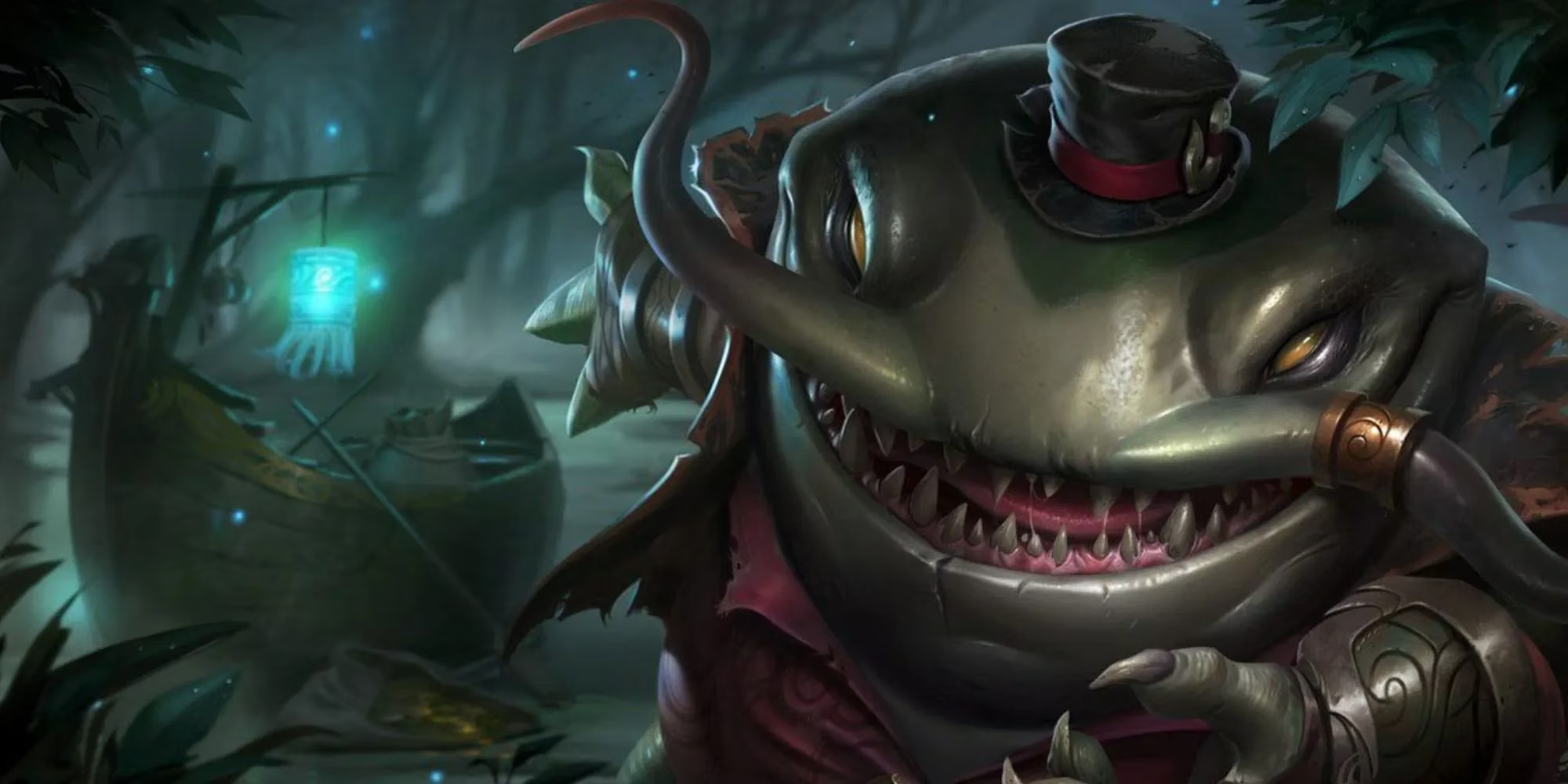
You see, Tahm Kench gets it. He's not just a giant catfish who licks people to death—he's a philosopher. The river, the flame, it's all part of the same delicious soup. Wield it right, and you'll climb faster than a Yuumi on a fed Toplaner. Trust me, your MMR will thank you.