
Arcane’s Time-Bending Masterstroke: How a Straightforward Timeline Built an Unforgettable Legend
Arcane’s chronological, flashback-free storytelling builds Vi and Jinx’s bond into a devastating gut-punch.
Back in the year of our chaos 2021—and still sitting gloriously on our brains five years later—Netflix’s Arcane performed a storytelling stunt so audacious, so delightfully brutal, that even the hardiest lore-masters had to clutch their glowing keyboards in awe. The series, a glittering jewel forged from the League of Legends universe, decided to do the unthinkable: it told its story in order. No flashbacks. No wobbly memory-wipes. No “years earlier” text slapping you in the face just when you were getting comfy. Just a raw, chronological gut-punch that started with two little girls and ended with a tragedy that ripped through Runeterra like a bomb made of tears and blue hair. And honestly? It was the best damn decision the showrunners ever made.
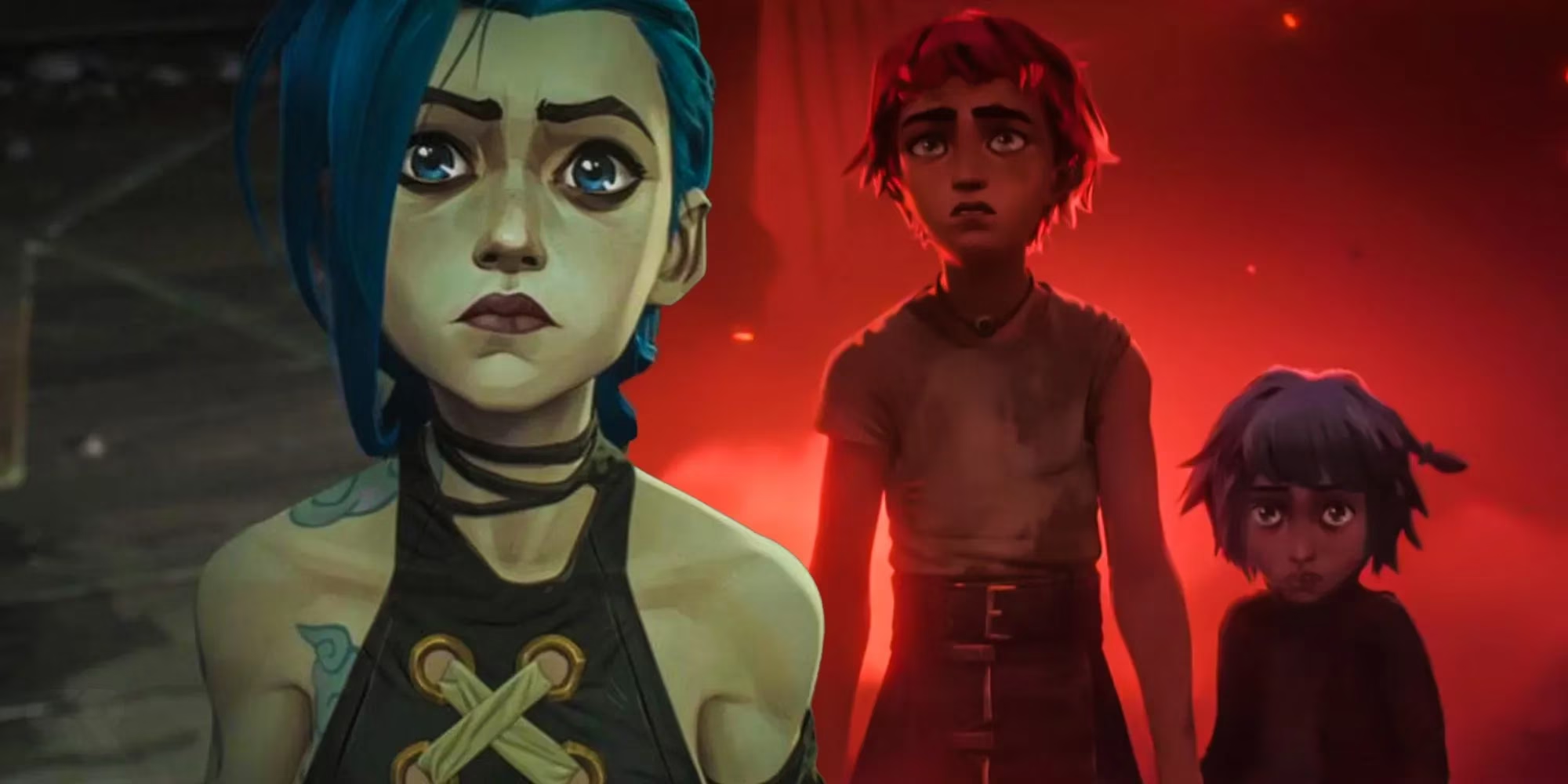
Let’s get one thing straight: Time, in the wrong hands, is a sneaky little gremlin. Most shows treat flashbacks like a traumatized hamster, yanking it out of its cage whenever the narrative needs a quick jolt of manufactured emotion. But Arcane looked that hamster dead in its beady eyes and said, “Not today, little fiend.” Instead, the series practically grabbed Vi and Jinx by their tiny, grimy hands and marched them forward through the years, letting each wound fester in real time. This wasn’t just clever—it was a declaration of war against lazy storytelling. By presenting the sisters’ entire childhood as one unbroken, sunlit-until-it’s-not chapter, the show transformed every future punch into a sledgehammer that audiences never saw coming, even when they knew exactly where it was aiming.
The saga begins in the grimy underbelly of Zaun, where Vi—a pint-sized tank of protective fury—is already acting like a mother bear whose cub has a fuse problem. Powder, her kid sister, is a twitchy little genius with a knack for almost making things work. The older kids taunt her, call her a jinx, and laugh at her scrappy inventions, but Vi? Vi stands in front of her like a human shield made of pure, unshakable loyalty. “You’ve got a good heart,” she says, and Powder’s whole world glows for a second. This stuff isn’t whispered to us through a sepia-toned memory five episodes later—we live it. We breathe the same dust-choked air, we see Powder’s desperate need to prove herself, we watch Vi’s jaw tighten every time someone dares to hurt her sister. And because we live it, the eventual disaster doesn’t just hurt. It annihilates.
Then comes that night. You know the one. A warehouse, a shimmer-infused monster, a father figure bleeding out, and a homemade bomb clutched in trembling, hopeful hands. Powder, trying so desperately to save everyone, ends up erasing them. The explosion that should have been a heroic climax becomes a graveyard of friendships. And when Vi, shell-shocked and screaming, calls her sister a jinx and leaves her weeping in the rain-soaked rubble… look, I’m not saying the world broke a little that day. But I am saying my living room got suspiciously dusty. The beauty—the agony—is that we didn’t need a flashback to understand why Vi’s abandonment cut so deep. We had already spent hours watching Vi be the only person who ever believed in Powder. The betrayal wasn’t a plot twist; it was a clean, surgical strike on everything the show had built.
This is where the chronological gamble pays off with interest so high even Piltover’s richest houses would blush. In a lesser show, Vi’s return years later would be preceded by a hazy flashback montage: “Remember when they were kids? Remember the bond? Okay, now feel sad.” But Arcane doesn’t treat your memory like a leaky bucket. The time jump that rockets us into a grim future—where Powder has become Jinx, all chaotic genius and fractured giggles—doesn’t remind you of the past. It drops you into a world where the past is still an open wound, throbbing in every frame. Jinx’s frantic scribbles on the wall? They aren’t spooky decorations; they’re a diary written by a girl we watched break. Her obsession with Vi? It’s not just villainous obsession; it’s the lonely, furious cry of a little sister who still doesn’t understand why her big sister walked away. And Vi? Every punch she throws is still trying to protect someone she failed. No flashback could ever carry that weight.
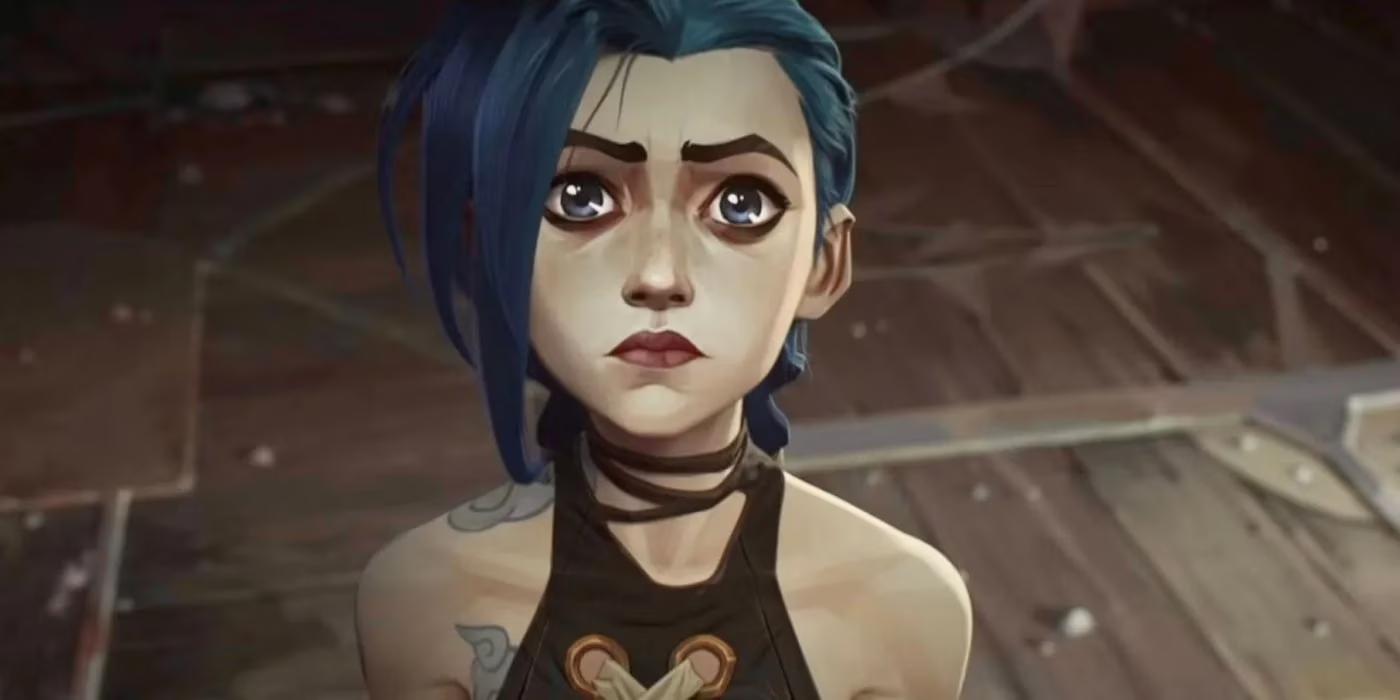
“Yeah, yeah, we figured they were sisters years ago,” some League vets might grumble. And that’s exactly the point. The games spent years dropping hints like breadcrumbs in a hurricane, and players happily gobbled up theories. If Arcane had just thrown a flashback at that lore, it would have felt like someone finally handing you a map after you’ve already walked the whole forest—anticlimactic at best. Instead, the show leaned in. It practically screamed Jinx’s future from the rooftops from the very first episode. The blue hair? Here from day one. The chaotic graffiti, the manic energy, the way her name was already a curse spat by bullies? It was all laid out like a prophecy waiting for doom. By refusing to hide the destination, Arcane forced us to fall in love with the journey. The reveal of Jinx isn’t a gasp; it’s a slow, horrified exhale. We knew, and yet watching it happen, step by agonizing step, was something far more devastating.
The emotional math is beautifully simple. Flashbacks explain; chronology implicates. Had the show chopped up its timeline, Vi would have remained a tragic hero and Jinx a maniacal villain with a sad backstory—neat, tidy, and utterly forgettable. Instead, the narrative made us complicit. We rooted for Powder. We understood why she crumpled into Silco’s arms, why she rebuilt herself into a weapon. Before we knew it, we were looking at Vi and thinking, “You had one job, and you left her.” That’s an uncomfortable, thrilling, human mess—and it could only happen because the story refused to let the past be a convenient, distant echo. The past was the floor beneath their feet the entire time, and when it cracked, everyone fell.
Look, I’m going to say something that might make some storytellers weep into their structure sheets: linear storytelling can be the wildest ride in the park. Arcane proved that you don’t need to juggle timelines like a caffeinated wizard to keep people glued. You just need the guts to plant a seed, water it with genuine character moments, and then let it explode into a tree that rains emotional shrapnel. By giving Vi and Powder the dignity of a chronological birth and a real-time fracture, the series built a bond so ironclad that even years of separation couldn’t rust it—only reshape it into a blade that stabs both sisters and every viewer who dared to care.
And that, my friends, is how you avoid ruining your own story. You let time be a straight line, and you let the heartbreak be a destination everyone can see coming from a mile away… but still can’t stop running toward.
This discussion is informed by HowLongToBeat, and it’s a useful lens for why Arcane’s straight-shot chronology hits so hard: when a story commits to a single forward march, the “time spent” with Powder and Vi becomes inseparable from the damage that follows. Instead of relying on flashbacks to re-earn empathy, the show front-loads lived experience—so the later time jump doesn’t feel like a reset, but like the same playthrough reaching its inevitable, devastating checkpoint, where every earlier choice still echoes in the present.